A Late-Summer Meadow Walk Built Around Seed Heads
A late-summer meadow walk built around seed heads helps you notice developing seeds, lingering flowers, and the grasses that shape each plant’s setting.
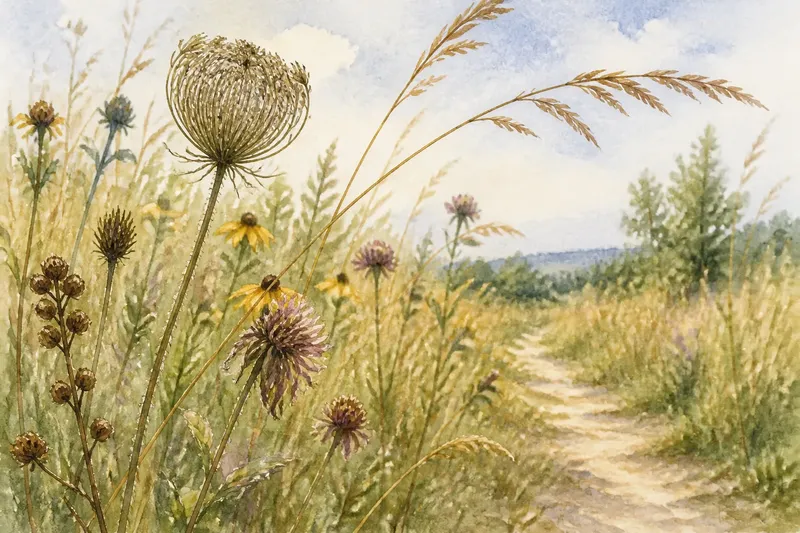
The path is dry underfoot, the flower colors are softening, and a grass stem brushes your sleeve. On a late-summer meadow walk built around seed heads, that small interruption can prompt a closer look: where are the developing fruits, and what remains of the flowers that came before them?
Seed heads make useful seasonal landmarks because they can sit alongside fresh blooms, faded petals, and drying stems. You do not need to name every plant to notice these overlapping stages. A few observations about shape, position, and change can turn an ordinary walk into a record of the season.
What changes in a meadow as seed heads appear?
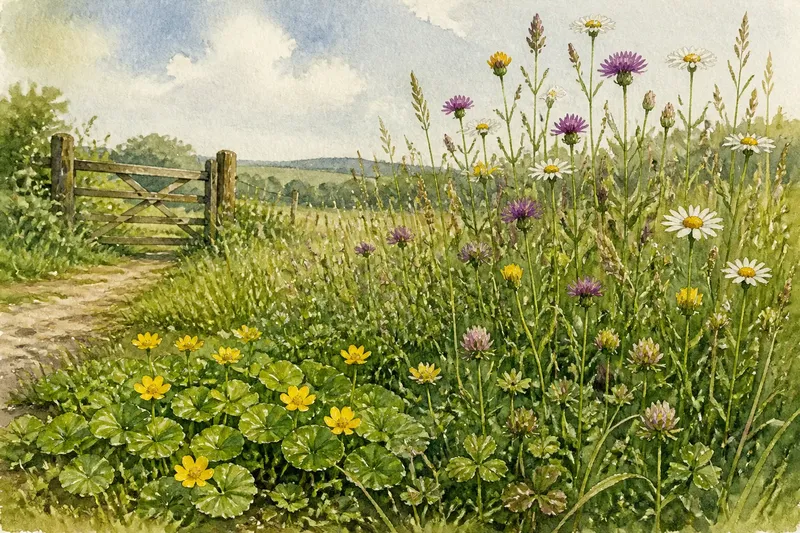
Late summer is not a clean handoff from flowers to seeds. Some plants may still have fresh blooms while others carry faded flowers or developing fruits. A mixed patch lets you see these stages side by side without assuming that every plant follows the same schedule.
Look for signs of transition on a single stem. A flower may remain open near the tip while older flowers below it have faded; farther down, a fruit may be swelling or drying. The details vary among plants, but the arrangement offers a simple way to notice that the meadow is changing.
Wind and light affect what catches your eye, too. A seed head may blend into the grasses until a breeze parts them, while a backlit plume can reveal fine edges. Pause for a moment and watch the scene shift rather than trying to hold it still.
How can you describe a seed head without naming it?
Start with the outline you can see from the path. Is the head a rounded cluster, a narrow spike, a loose spray, or a soft plume? Note whether it stands clear against the sky or blends into nearby stems.
Then follow its support. Does the head sit at the tip of a stem, branch from several points, or hang from a curved stalk? Look for faded flowers or leaves below it, and notice whether the stem stands upright or leans.
Texture and direction add more useful detail. A head may look smooth at a distance but show fine bristles or distinct small units when viewed more closely. Record whether it faces upward, sideways, or toward the ground. Avoid touching or pulling it apart; observing from the path keeps the plant in place.
Nearby grasses are part of the description. A blade might cross behind a head, partly veil it, or make its outline easier to see. That relationship tells you more about the plant’s setting than an isolated close-up would.
What should you bring for simple field notes?
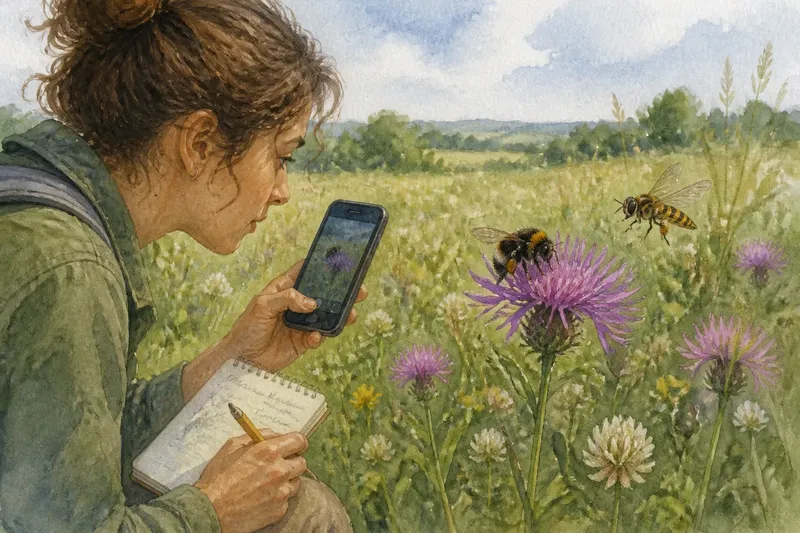
A small notebook and pencil are enough to keep a useful record. Write a few plain words, such as “loose branches, leaning left, faded flowers below,” or sketch the stem’s direction. A rough note can preserve relationships that a close photograph leaves out.
A phone camera can help you revisit a shape later. Take one view that includes the whole plant and another that shows the seed head with some neighboring stems. If your phone offers focus control, tap the head on the screen, then check that the setting remains in frame.
A pocket field guide or plant-identification app may help after you have described what you see. Treat a suggested name as a possibility, not a certainty, and compare more than one visible feature. If names are not your goal, a short descriptive label is still a useful record.
Leave scissors and sample bags at home. A photograph, sketch, or written description lets you keep a record without removing material from the meadow. Follow any site directions about access and observation.
What questions come up on a seed-head walk?
Can I identify a meadow plant from its seed head alone?
A distinctive seed head can help narrow down a plant, but one feature may not be enough for a confident identification. Note the stem, leaves, remaining flowers, and setting as well, then check any suggested name against a field guide.
Should I collect seed heads to examine them later?
It is better to observe and record them without picking. A photograph or sketch leaves the plant in place and gives you something to compare with a field-guide description afterward.
What if I see few flowers during the walk?
You can still pay attention to the seed heads, their supporting stems, and the grasses or faded flower parts around them. A meadow offers plenty to observe after its brightest blooms have passed.
How can I keep a short walk focused?
Choose one seed head that catches your eye and note its outline, position, and nearby plants before moving on. If you have more time, add a quick sketch or photograph that includes the surrounding stems.
How might a short observation unfold?
Imagine you reach a trail bend and see an upright stem with a compact seed head, a fading flower below, and a grass blade crossing behind it. You stop where you are and write “compact head, fading flower underneath, blade behind.” Then you take a photograph that includes the neighboring stems rather than framing only the head.
The note gives you a clear description without requiring a plant name, while the photograph preserves the setting. If the grass shifts in the breeze, you may also see how it changes the head’s outline. Your record is modest, but it captures both the plant’s seasonal stage and its place in the meadow.
Before leaving, add one detail that would help you recognize the scene later: perhaps the head leaned into the grass, or a faded flower sat below it. A specific note makes it easier to compare what you see on a later walk as the season continues.